



Unlimited drug programs. Consequences of introducing unlimited drug programs – economic and systemic analysis
The report presents an assessment of the economic and systemic consequences of introducing unlimited access to drug programs in Poland. To the best of our knowledge, this is the first comprehensive attempt to estimate these effects. Unlimited access is understood as providing healthcare providers with a guarantee that the payer will finance the treatment of all identified patients who meet the eligibility criteria for the drug program. This means that the decision to start treatment is based solely on clinical grounds, rather than on limits resulting from the value of contracts with the National Health Fund (NFZ) for the implementation of a given drug program by a center. Translated with DeepL.com (free version)
- Drug programs and benefit limits. Theory versus practice
- General analysis of drug programs in Poland
- Detailed analysis of selected drug programs
- Unlimited healthcare benefits. Experiences and conclusions


•••
Systemic analysis of the organization and functioning of treatment for patients with hemophilia, including implementation
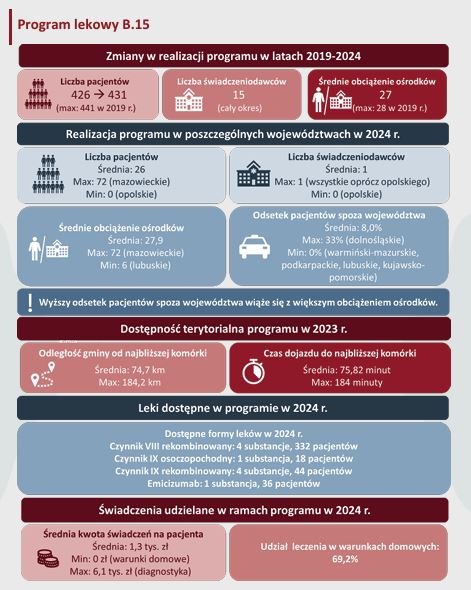
Hemophilia generates significant economic and social costs. The annual direct costs incurred by the system (National Health Fund and Ministry of Health) amount to PLN 521 million. Patients and their families bear a significant financial burden – PLN 10 million in direct expenses and PLN 134 million in indirect costs resulting from reduced household income. In total, this amounts to over PLN 140 million per year borne directly by patients and their loved ones.
- Organization and functioning of the system
- Costs of illness
- Challenges and proposals for change
•••
Drug program B.44 Treatment of patients with severe asthma
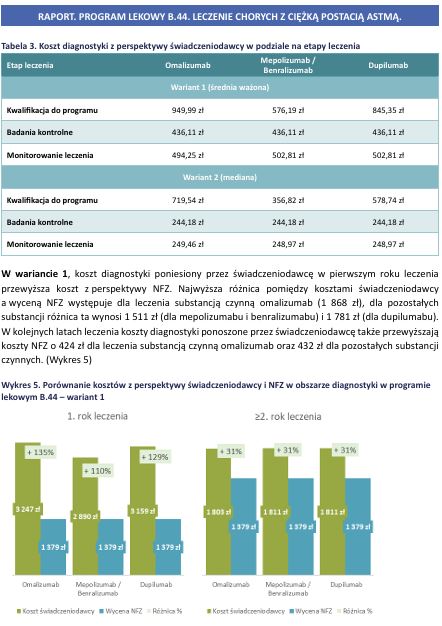
The contract amounts for program B.44 are growing year on year, and in recent years they have more than doubled (PLN 46 million in 2019 vs. PLN 107 million in 2022). On the other hand, the number of patients covered by the drug program has increased nearly 2.5 times since 2019, but this still means that in 2022, only every 13th to 15th patient with severe asthma will receive treatment appropriate for their condition. At the same time, the number of healthcare providers entering into contracts is growing: in 2019, there were 54, while in 2022 there will be 60, and in 2023, 65.
- Analysis of organization and functioning
- Economic study
- Recommendations for changes
•••
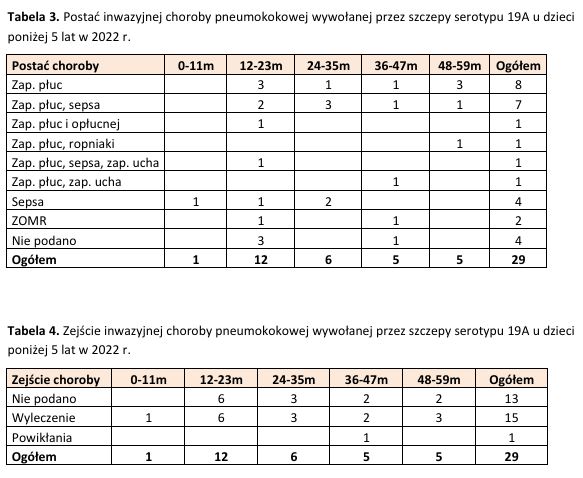
Invasive pneumococcal disease (IPD) in children <5 years old in 2022
In 2022, KOROUN laboratory confirmed 17 cases of invasive pneumococcal disease caused by serotype 3 strains in children under 5 years of age (0-59 months), accounting for 20.2% (17/84) of pneumococcal infections with a specific serotype in this age group. The youngest child with a serotype 3 infection was six months old and the oldest was four years and eleven months old.
- Epidemiology
- Vaccination status
•••
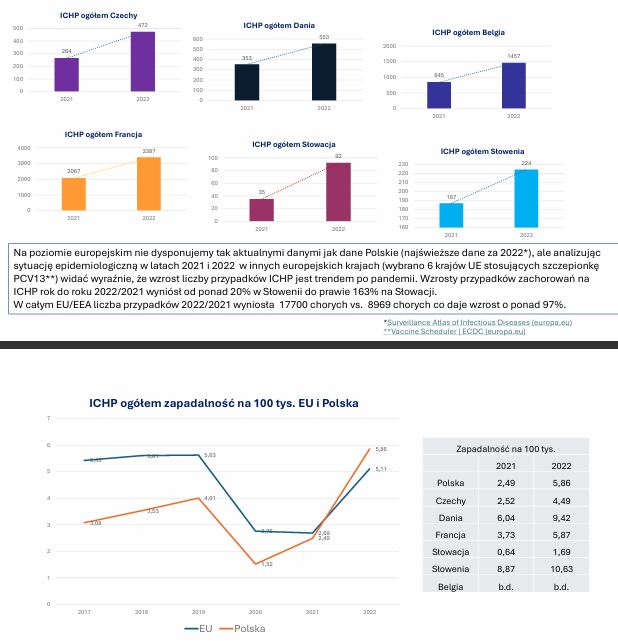
Invasive pneumococcal disease: the epidemiological situation in Poland compared to the EU
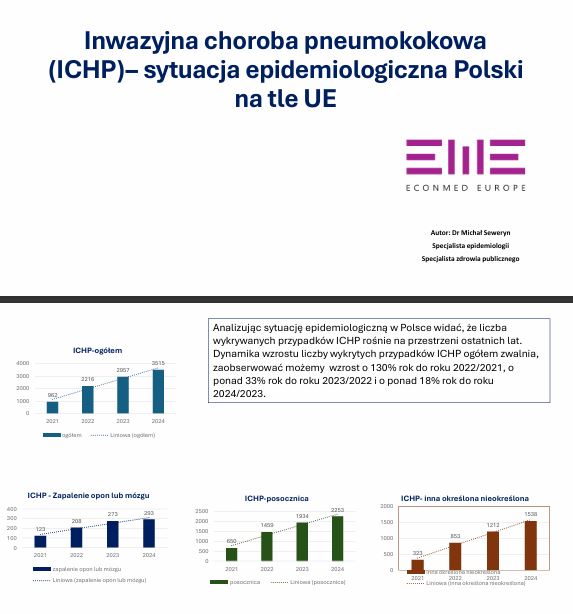
An analysis of the epidemiological situation in Poland shows that the number of detected cases of ICHP has been growing in recent years. The growth rate of the total number of detected cases of ICHP is slowing down, with an increase of 130% year-on-year in 2022/2021, over 33% year-on-year in 2023/2022, and over 18% year-on-year in 2024/2023..
- Epidemiology
- Vaccination status
•••
Pneumococcal disease in children under 5 years of age in 2023, caused by isolates of serotypes 3 and 19A
In 2023, KOROUN laboratory confirmed 19 cases of invasive pneumococcal disease caused by serotype 3 strains in children under 5 years of age (0-59 months), accounting for 17.8% (19/107) of pneumococcal infections with a specific serotype in this age group.
- Epidemiology
- Vaccination status


•••
Systemic analysis of oncological care for lung cancer patients in Poland
The authors of the analysis of the state of care for patients diagnosed with lung cancer in Poland describe the current situation in detail in terms of epidemiology and organization. They point to the increasing challenges resulting from the rise in incidence, analyze current organizational solutions and financial burdens (direct and indirect costs), and refer to the actual needs and expectations of patients.
- Organization and functioning of the system
- Costs of illness
- Challenges and proposals for change/li>


•••
Preventive vaccinations in Poland
This report presents the current situation in Poland and provides recommendations that may contribute to a better understanding and management of adult vaccination programs in Poland.
- Financing vaccinations in Poland
- Vaccinations under health policy programs
- Cost analysis


•••